Reducing Waste and Ensuring Accountability: A Case Study with Simplist® and Data Analytics Tools
Middlesex Health
Disclaimer: Testimonials and data that appear on this case study are provided by real clients. Case Studies describe our past work on real cases, but our past performance in a specific case is no guarantee or representation of the likelihood that you will prevail in your case if you use our products or services.

85%
Reduction in overall Hydromorphone waste events*

55%
Reduction in overall Fentanyl waste events*

410
Nursing hours saved annualized
The Challenges
- Identifying and investigating potential drug diversion incidents
- Inefficient clinician workflows related to dispensing and wasting controlled substances
The Solution
- More closely match clinical practice for commonly used opioid medications
- Utilize AI Diversion Software to identify potential drug diversion events through pattern recognition
The Impact
- Decreased hydromorphone and fentanyl waste by 85% and 55%, respectively, resulting in fewer opportunities for diversion
- Reduced the time nurses spend counting and wasting controlled substances
- Reduce the time required for pharmacy staff to investigate discrepancies and potential diversion events
*Data provided by Middlesex Hospital and analyzed by Fresenius Kabi’s Simplist Support Team.
Introduction
Middlesex Health, a Mayo Clinic Care Network member, is a fully connected, comprehensive network of expert health care providers in Middletown, Connecticut, serving Middlesex County and the Connecticut state shoreline. At the heart of this network is Middlesex Hospital, with 275 licensed beds, which provides inpatient medical, surgical, and emergency services, as well as vital outpatient care, including diagnostic, rehabilitation, behavioral health, disease management, radiology, laboratory, cancer care, home care, wound and ostomy care, surgical services, urgent care, and an extensive network of primary care practices.
To support its clinical operations and medication stewardship goals, Middlesex Health implemented an integrated set of clinical data analytics and monitoring tools designed to help identify patterns in medication use, monitor dispensing and waste activity, and streamline investigation workflows. These tools use automated analysis and pattern recognition software to surface potential areas of concern in controlled substance handling, reducing the need for time-intensive manual review of disparate reports. By combining clinical data with automated alerts and dashboards, Middlesex Health aimed to free up pharmacy and nursing staff to focus more on direct patient care and safer clinical workflows.
Fresenius Kabi USA is a global, integrated pharmaceutical company dedicated to bringing lifesaving medications and solutions to clinicians. For more than 100 years, the company has been a leader in providing high-quality, affordable medications for chronically and critically ill patients. Fresenius Kabi produces Simplist, a single-unit-dose prefilled syringe platform. Designed for efficient medication delivery and ease of use, Simplist may help reduce waste potential and eliminate steps where errors can occur.1,2
The Challenge
“In every organization, drug diversion is a potential threat to patient safety. Risks to patients include inadequate pain relief and exposure to infectious diseases from contaminated needles and drugs, compounded by impaired performance. Furthermore, diversion may cause undue suffering to patients who don’t receive analgesic relief, can be costly to an organization by damaging its reputation, and may lead to major civil and criminal monetary penalties.”
Drug Diversion and Impaired Health Care Workers: April 20193
In response to the opioid crisis, hospitals across the country are taking a more strategic approach to opioid stewardship. Doing so better ensures the safe and effective use of opioid drugs — not only reducing potential patient safety issues but also potential opportunities for drug diversion.
While pain management remains an important part of treating patients, the use of narcotics presents a number of operational challenges. Research studies indicate that roughly 10 percent of American healthcare workers abuse controlled substances, a number that matches the abuse rate within the general population.4 Several high-profile cases of drug diversion at U.S. hospitals have resulted in costs adding up to millions of dollars. As a result, an increasing number of hospitals are now implementing narcotic diversion platforms, leveraging the power of analytics, to identify potential diversion patterns in the ordering, dispensing, and wasting of narcotics within the institution. The goal is simple: to ensure controlled substances are used appropriately — and, equally important, to quickly identify potential diversion events.
Advanced diversion analytics programs can analyze narcotic use records to quickly identify potential diversion through pattern recognition informed by historical diversion events, reducing the need for pharmacy staff and nursing supervisors to manually review multiple reports. These systems also provide visibility into the volume of narcotic waste — an operational metric that is often correlated with increased diversion risk and inefficiencies in medication handling.
“One of the biggest challenges we face is reconciliation of opioid waste. We work hard to make sure that we’re checking all the boxes and investing in high impact projects that can help support our opioid stewardship. But we were spending a lot of time looking for discrepancies in waste reporting that could be better spent elsewhere.”
Jason Zybert — Director of Pharmacy at Middlesex Hospital
Zybert also noted that controlled substance waste at Middlesex Hospital required significant nursing hours. Two nurses are required to be present to document any waste, but even so, it’s well known that such wasting events can increase opportunities for diversion.3
The Solution
As noted in the ASHP Guidelines on Preventing Diversion of Controlled Substances, August 2022,5 “Policies and procedures should define how waste will be accounted for, tracked, and disposed of to prevent unauthorized access. To minimize waste, when possible, controlled substances are [recommended to be] stocked in ready-to-use form and in the lowest commercially available units for doses frequently prescribed for patients.”
To enhance narcotic stewardship and operational efficiency, Middlesex Health adopted a combination of automated analytics and clinical workflow tools to identify usage patterns and potential discrepancies in controlled substance handling.
Key elements of the solution included:
Implementing data analysis software that continuously reviews dispensing and waste records to identify anomalous patterns and potential risk areas, reducing the need for manual reconciliation and repetitive reporting tasks.
Integrating automated reporting and alert systems that notify pharmacy and nursing leadership about unusual trends or outliers in medication dispensing, facilitating faster investigation and resolution.
Combining these software capabilities with the deployment of ready-to-administer prefilled syringes sized to more closely match common clinical dosing practices. By better aligning product sizes with everyday use, the hospital reduced unnecessary preparation and waste—and in turn, minimized opportunities for handling errors and diversion.
See full Important Safety Information, including Boxed Warning
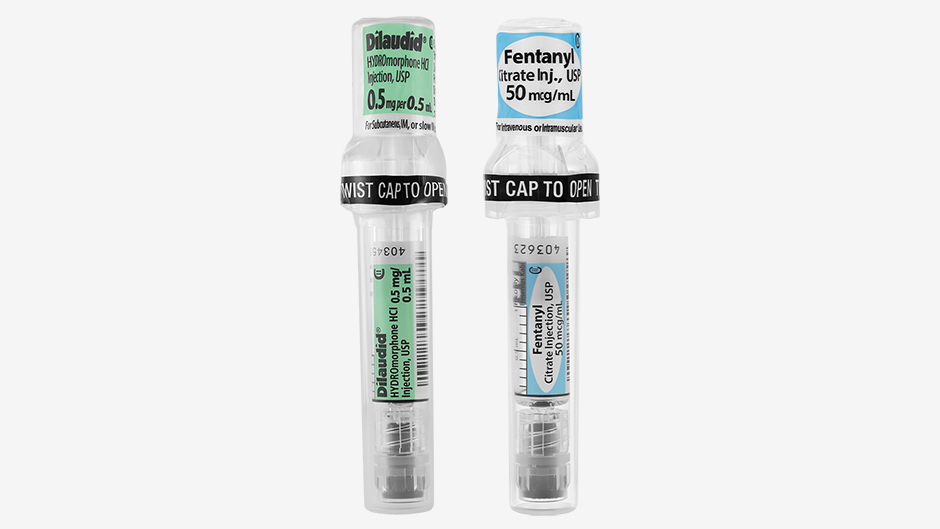
In 2018, Middlesex Hospital introduced Dilaudid® (HYDROmorphone HCl) Injection, USP 0.5 mg per 0.5 mL Simplist syringes. When Simplist Fentanyl Citrate Injection, USP 50 mcg per 1 mL was released in 2021, Middlesex Hospital also switched to these syringes to support their efforts to curtail narcotic waste. These combined efforts aligned with professional guidelines recommending the use of ready-to-use formats and data-driven monitoring to both improve efficiency and prevent controlled substance misuse.
“We wanted to implement solutions that could help us better match our clinical practice while also helping to reduce waste, reduce nursing time, and reducing our overall diversion risk,” said Zybert.
The Results
After implementing the integrated analytics and workflow enhancements alongside ready-to-administer prefilled syringes, Middlesex Hospital observed significant improvements in narcotic stewardship and operational performance.
Reduction in narcotic waste:
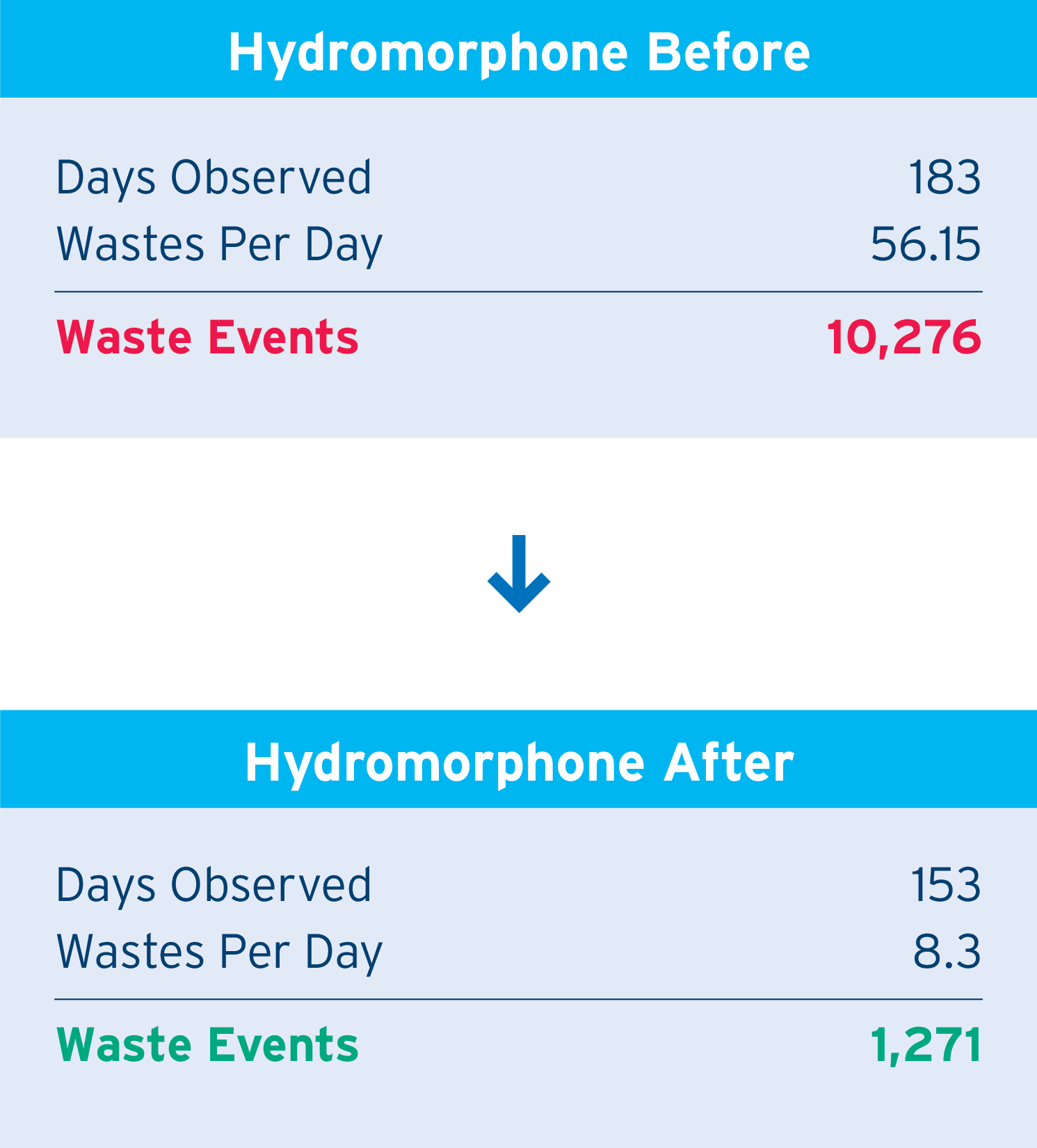
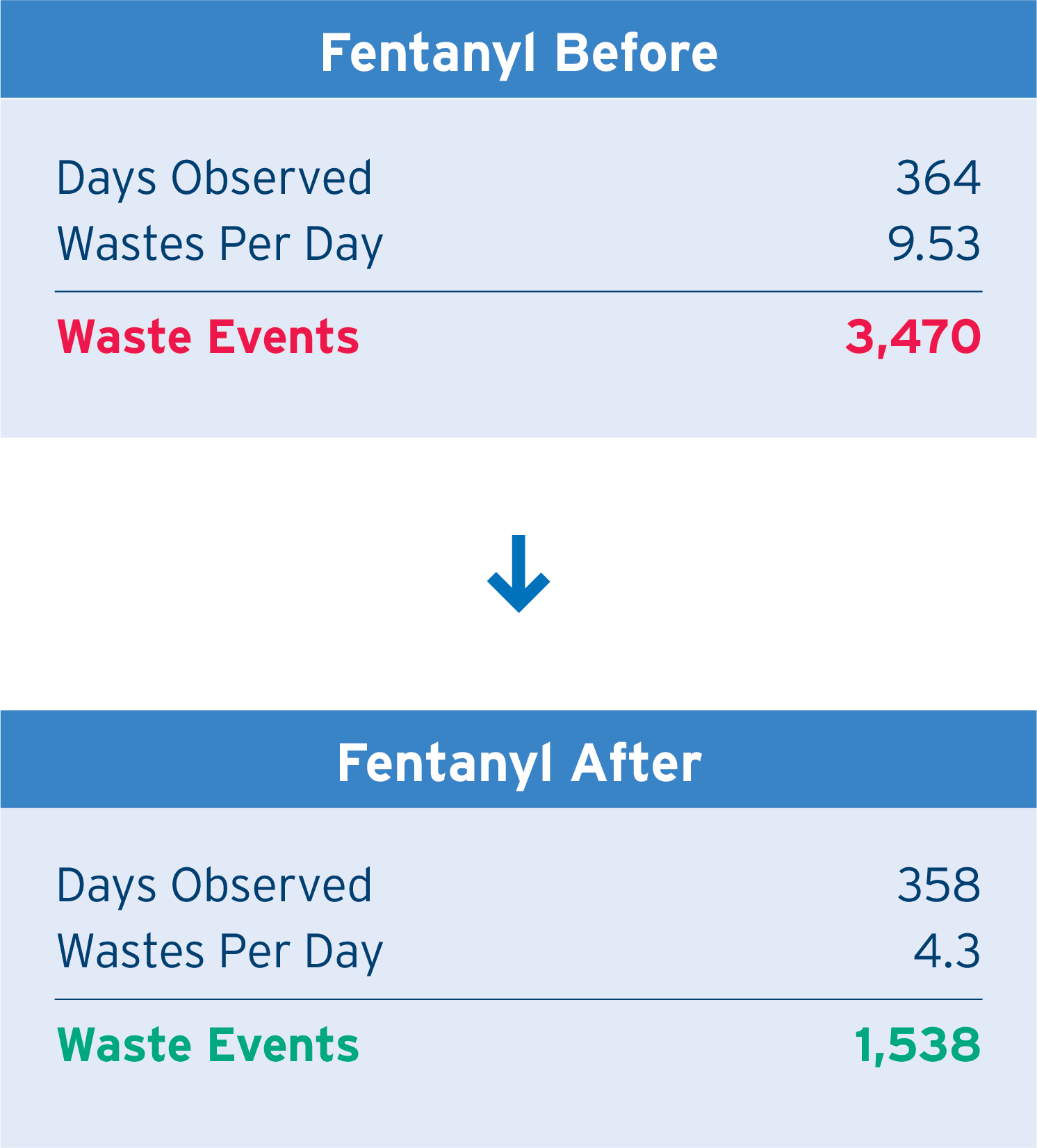
By optimizing product presentation and using analytics to refine workflows, the hospital reduced hydromorphone waste by approximately 85% and fentanyl waste by approximately 55% compared with prior periods.
Estimated cost savings:
Using the financial framework demonstrated in A Continuous Observation Workflow Time Study to Access Intravenous Push Waste (2020)2 , Middlesex Health estimated $46,309.88 in annual savings from reduced narcotic waste costs.
“Having the product sizes that better matched our clinical practice helped us reduce waste and make a big impact throughout our stewardship program,” said Zybert.
WASTE DATA OBSERVED: PRODUCT OPTIMIZATION OPPORTUNITIES
Time savings for clinical staff:
The reduced waste and streamlined reporting saved an estimated 410 nursing hours annually, freeing nursing staff to spend more time on direct patient care rather than on administrative tasks.
Improved operational workflows:
Nursing and pharmacy teams reported more efficient processes, driven by reduced preparation requirements and simplified documentation for controlled substance handling.
“Our nurses like the product because it’s ready to use. They don’t have to draw from a vial to administer the medication. They can just pull it out of the packaging and have the medication ready. And, my opinion is when you can reduce waste, you decrease the risk of diversion,” Zybert said. “On the pharmacy side, we see benefits in the tamper-evident packaging, especially when diversion is suspected. It makes it much clearer whether something has happened with an individual product or something else may be going on.”
Overall, by focusing on maximizing opioid stewardship through data review and waste reduction, Middlesex Hospital improved its operations and reduced the time nursing and pharmacy staff spent documenting and handling it.
Let’s reduce narcotic waste together
Schedule a call with our Pharmacy Analytics team for a custom analysis
Contact us